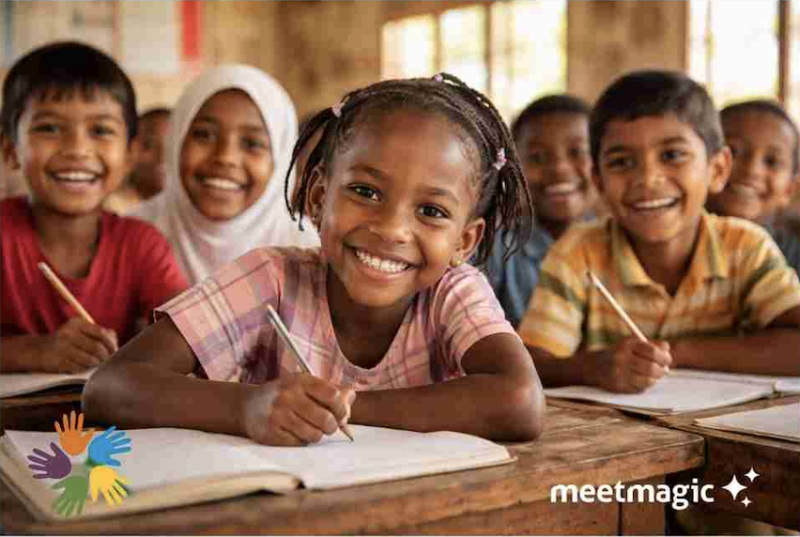

SMART NUSANTARA SCHOOL (Developing Education in Eastern Indonesia)

By Handriyana Handriyana

Ends in 216 days

Eastern Indonesia still faces significant challenges in education. Data shows that the average length of schooling in East Nusa Tenggara (NTT) (7.2 years), Papua (6.5 years), and West Nusa Tenggara (NTB) (7.5 years) is still below the national average (8.5 years).

Education (General)

AED 2,500.00

About the Cause

Dubai Cares’ programs are designed to reduce, if not remove, the greatest obstacles that prevent children and young people in developing countries from attaining quality education. With each intervention, Dubai Cares evaluates the need for assistance across two key areas: 
 
Access to Education which allows Dubai Cares to improve children’s health and learning environment, increase education enrollment and attainment, increase access to education, reduce absenteeism, increase gender parity and increase promotion rates.
 
Quality of Education which enables early learning, enhances educational attainment and school progression, improves literacy and numeracy skills among children, enables teachers to access teacher training resulting in better learning outcomes, reduce dropout rates and increase primary school attainment.

Dubai Cares is a long-term advocate of safeguarding children and young people’s right to education and is currently playing a global advocacy role in spreading the knowledge about the importance of providing education to the unprivileged children.
We also champion education through research - There is an overwhelming lack of evidence as to what works to promote children’s learning in crisis-affected contexts. Research plays a pivotal role in tackling this issue.
 

My Story

This program aims to improve the quality of 80% of primary and secondary education facilities in four priority regions of Eastern Indonesia (Manggarai, East Nusa Tenggara, Tambraw, Papua, Tidore Islands, and Bima, West Nusa Tenggara), with a focus on meeting basic infrastructure standards, learning resources, and access to technology. This target includes improvements to 32 schools, including the provision of adequate classrooms, libraries, simple laboratories, and adequate sanitation and clean water facilities. The program specifically ensures that 20% of beneficiaries come from vulnerable groups, including girls, people with disabilities, and marginalized communities. Priority is given to: (1) school dropouts in isolated areas, (2) students from families with incomes below the regional poverty line, and (3) students with special needs. In addition, the program involves 240 teachers and education personnel in inclusive training and empowers 60 local communities as agents of educational change in their respective regions.

For better web experience, please use the website in portrait mode