
About the Cause
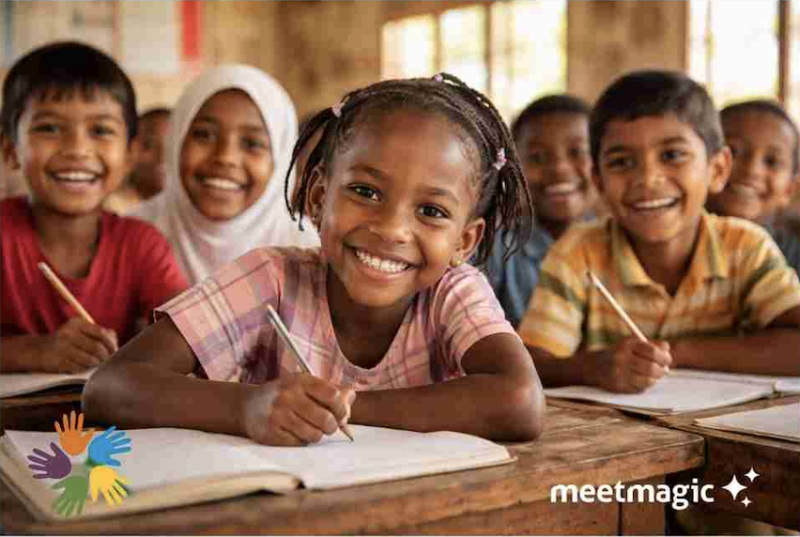
Poor health and nutrition negatively affect children’s school attendance and ability to learn. We implement school feeding programs that look for alternative ways to ensure sustainable supply of nutritious foods to school children and young people in urban and marginalized areas.
In addition, contaminated water and poor sanitation are big factors that result in the death of children worldwide. In our programs, we always include what is called WASH which means Water, Sanitation & Hygiene. This is done through the design and construction of child-friendly and gender sensitive facilities for sanitation, such as latrines and hand-washing stations. We also provide clean water supply by building water wells and raise awareness about the importance of sanitation and hygiene.
My Story
Isingiro, Mbarara and Ntungamo Districts lie in semi arid areas of Ankole - Masaka dry corridor, and there are more than 2,000 families in Nakivale Refugee camp and 250,000 families in the Districts. However, the health of hundreds of pregnant women, new mothers and babies who have integrated within nearby villages are at risk. The villages lack clean water, and women and Children are forced to walk up to 4 km to seek for water, and the water they find is often not good for human consumption but since they do not have any options they do consume. The main problem of the project communities is poor health of the people. In the absence of potable clean water supply and sanitation facilities in the identified project communities, the rate of death associated with the ten most common diseases, which are preventable has increased steadily in the last 5 years. The following causes and effects were identified after the problem tree analysis with the participation of the project communities. Causes: (a) Low awareness of good hygiene practices (b) Poor Hygiene promotion (c) Inadequate Sanitary inspectors (d) Use of water from streams and pond sheared with animal for domestic use (e) inadequate Sanitation facilities (f) Limited Mobility for Hygiene Promoters (g) Inadequate planning for Hygiene promotion. (h) Inadequate involvement of Private sector e.g. Partner Organizations. Effects: (a) Poor Health of community (b) Increased morbidity (c) Increased community medical cost (d) Increased water and sanitation related diseases and deaths. (e) High levels of poverty. The major achievement expected from this project is to create access to good drinking water and sanitation facilities to 19.2% of the population in the districts. And this achievement would go a long way to complement the efforts of the District Authorities and other organizations already working towards the provision of safe water, which is currently accessible to only 30.8% of the districts total population. Project Goals And Objectives Goal Short-Term: Is to improve access to potable clean water and sanitation facilities to identified project communities. Goal Long-Term: Maximize Health benefits of the people and reduce poverty level in the project communities. Objectives: To form and train 10 water user groups to operate and maintain both water and toilets in their communities. To drill 10 boreholes in the selected communities. To reduce on spread of water borne diseases among the refugees and the selected communities. To Build 4 KVIP Toilet of 4-seater capacity in Nakivale Refugee camp. To shorten water distance points from 4 KM to less than a half a Kilometre. To increase on time spent at school by the children. To install Smart HandPumps aiming at reducing average time to repair a broken pump from 27 days to three days. Project Expected Results Expected Outcomes are: Improved quality life. Morbidity reduced. Less medical expenses of the people in the project communities. Reduced water and sanitation related diseases. Awareness of good hygiene practices increased. Effective and efficient hygiene promotion adopted. Adequate number of trained hygiene promoters available. Appropriate hygiene promotion materials developed. Adequate number of latrines available for schools and communities’ use. Adequate source of portable clean water available to the communities. Poverty level of the people reduced. Physical Output Expected: 10 boreholes drilled for for the selected communities. 4 KVIP Toilets of 4-seater capacity constructed in the Refugee camp selected. Project Indicators The following are indicators to be used to measure the results achieved by the activities of the project: Short Term goal indicators are: Presence of safe drinking water sources available in the various communities and Presence of institutional latrines in the refugee camp. Long Term goal are: Hospital attendance for water and sanitation related disease reduced, Healthy children seen in all communities, School enrollment increased and adults engaged in various income generating activities. Objective (1) indicators are: 10 trained Water user groups available. Objective (2) indicators are: Presence of 10 boreholes in the communities in use. Objective (3) indicators are: Presence of Health & Hygiene Education posters seen in communities and Water fetching points are free from weeds, algae, animal droppings and stagnant water. Objective (4) indicators are: Presence of 4 KVIP Toilets in Nakivale Refugee camp. Objective (5) indicators are: Water distance points reduced to less than a Kilometer. Objective (6) indicators are: Pupils spent more time in schools than the entire day fetching water. Objective (7) indicators are: Installation of Smart HandPumps that will reduce average time to repair a broken pump from 27 days to three days. The following shall be the sources of verifying the indicators mentioned above; they are visits to verify water points and presence of latrines, verification of health records at health facilities e.g. clinics and hospitals, community visit observations, interviews, spot check counting, surveys and House to House visits.